

Understanding sativa vs indica vs hybrid vapes begins with knowing what those categories describe. They are familiar terms on cannabis menus, but they provide only part of the information about a finished product.
This guide from Fire & Oak Mount Holly uses three &Shine listings as examples: Ghost Train Haze, Northern Lights, and Fruit Punch. Each appears in a 2g disposable format, with a different category attached to its name.
For readers researching a dispensary or searching for “dispensary near me,” these labels may be among the first details they encounter. Understanding their meaning—and their limits—helps put the rest of a product description into context.
In contemporary cannabis descriptions, “sativa” and “indica” function as broad commercial categories. Although the terms have botanical origins, their use on a menu does not provide a complete genetic or chemical description.
“Hybrid” generally indicates a classification associated with mixed sativa and indica ancestry. The word alone does not establish a precise genetic percentage, a particular cannabinoid ratio, or a predictable experience.
Research published in Nature Plants on cannabis labeling and genetic variation distinguishes these everyday labels from botanical classification and shows that they capture only a limited part of the variation among cannabis samples.
For a vape listing, it helps to separate four fields:
These fields describe different characteristics. None replaces the others.
Ghost Train Haze, Northern Lights, and Fruit Punch provide a useful example of how one brand presents different categories within a shared format.
The classifications below reflect the product listings reviewed on October 14, 2026.
The Ghost Train Haze Disposable 2g is identified as an &Shine sativa disposable. Its product page lists “Sativa” under strain prevalence and “Ghost Train Haze” as the strain name.

This distinction separates a broad category from a specific name. “Sativa” groups the listing within the menu, while “Ghost Train Haze” identifies the named product.
The category does not establish its complete ingredient list or extraction method. Likewise, background information about a named cannabis variety should not automatically be treated as a description of every finished vape carrying that name.
The Northern Lights Disposable 2g appears as an &Shine indica disposable, with Northern Lights listed as its strain name. It shares the 2g designation and disposable format of the other examples.
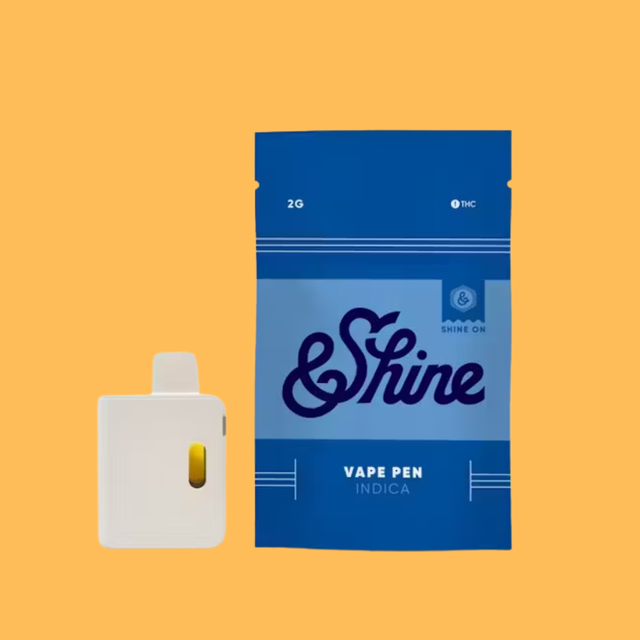
“Indica” identifies the category assigned to this listing. It does not specify a person’s tolerance, establish a recommended time of day, or provide evidence that the product will produce a particular response.
A useful reading therefore keeps the category attached to its documented role: it describes how the product is classified.
The Fruit Punch Disposable 2g is identified as an &Shine hybrid disposable. Its page lists the category, Fruit Punch name, and 2g size as separate details.
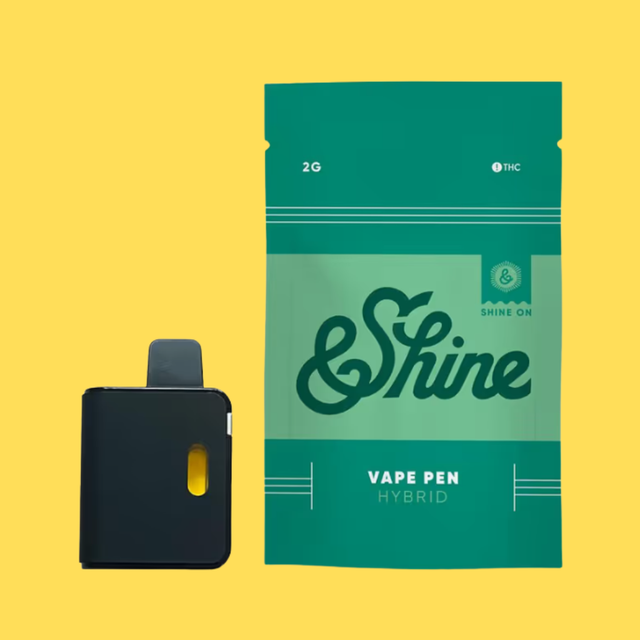
Here, “hybrid” should not be read as a statement that the product contains equal amounts of THC and CBD. It also does not document an exact 50/50 genetic split.
The name “Fruit Punch” identifies the product, but it is not an ingredient statement. Any claims about flavoring ingredients or the source of its terpenes require separate documentation.
Scientific research offers a reason to interpret these labels carefully.
The 2021 Nature Plants study found that sativa and indica labels poorly represented overall genetic and chemical variation in the samples examined. The researchers did identify associations involving certain terpenes, which means the findings should not be simplified into a claim that every label is meaningless.
A separate 2022 study published in PLOS ONE examined commercial cannabis flower data from six U.S. states. It found that common commercial labels did not consistently correspond to the chemical diversity measured in the samples.
These studies did not test the three &Shine disposables discussed here. Their relevance is broader: category names should not substitute for information about the specific finished product.
For vape descriptions, the practical implication is to distinguish the assigned category from documented formulation details. A familiar name or classification alone cannot establish the contents of a particular batch.
Even detailed product information cannot guarantee how someone will respond.
Health Canada’s overview of cannabis and health explains that responses can vary between people and from one occasion to another. Relevant factors include THC and CBD content, previous cannabis experience, existing health conditions, and other substances or medications.
That makes descriptions such as “always energizing,” “guaranteed relaxation,” or “perfectly balanced effects” too definite to infer from a category.
When the question concerns composition, more specific documentation is available. The New Jersey Cannabis Regulatory Commission’s guide to certificates of analysis explains how laboratory reports identify tested products and batches, report cannabinoid measurements, and present contaminant testing results. Terpene information may also be included.
The distinction is useful: laboratory documentation describes measurements from a tested sample, while a person’s response remains individual.
No. A sativa designation does not guarantee increased energy, focus, or creativity. Cannabis can also impair attention and coordination, and responses vary between people and occasions.
No. “Hybrid” is a category label, not a cannabinoid ratio. THC and CBD content must be established from the product’s reported measurements. The distinction between commercial categories and chemical composition is central to the research on cannabis labeling.
Yes. The Ghost Train Haze, Northern Lights, and Fruit Punch listings reviewed for this article identify &Shine as the brand and describe each product as a 2g disposable. Their assigned categories are sativa, indica, and hybrid, respectively.
No. The 2g designation describes the stated quantity. It does not identify a sativa, indica, or hybrid category, establish cannabinoid concentration, or predict a particular experience. All three examples share that size while carrying different classifications.
The distinction between sativa vs indica vs hybrid vapes becomes clearer when each category is kept in context. Ghost Train Haze, Northern Lights, and Fruit Punch illustrate three classifications within the same brand and format; their names and categories remain separate from their formulation details.
Readers following Fire & Oak’s broader local education series can also find its Burlington website. For additional guidance on product information and cannabis risks, the NJ-CRC’s safe and responsible consumption resource covers package information, secure storage, and avoiding impaired driving.