

Understanding a cannabis brand starts with knowing what its name tells you—and which details belong to the individual product. A company’s history, cultivar descriptions, packaging and laboratory information each answer a different question.
Clade9 provides a useful case study. At Fire & Oak in Mount Holly, published coverage includes a founder interview, articles about the brand’s cultivars and examples spanning several product formats.
Three featured listings—Orange Push Pop, Blue Dream and Lemon Cherry Gelato, each described as a 1g disposable—show how one brand can contain several distinct product identities. Their shared format gives us a starting point for examining genetics, terminology and transparency.
A product description often combines several layers of information:
For these examples, Clade9 is the brand. Orange Push Pop, Blue Dream and Lemon Cherry Gelato are the product names. “1g disposable” describes the listed format and quantity.
Keeping those layers separate makes descriptions easier to interpret. A statement about a company’s cultivation philosophy does not establish the cannabinoid content of an individual package. Likewise, a familiar cultivar name does not provide a complete ingredient list.
The useful question is: Which part of the product does this information describe?
A company’s background can explain its priorities and the language it uses.
In Fire & Oak’s Clade9 founder interview, published in May 2026, Dave Holmes discusses his interest in genetics and the origins of the company’s name. He connects Clade9 to cladistics and the idea of branches on an evolutionary tree.
Holmes also describes working with genetics he has collected, traded and bred, with terpene profiles helping shape his selection.
That interview provides context for the brand’s stated approach. It helps explain why cultivar identity and aromatic families appear throughout its materials.
When reading a founder interview, consider how specific the answers are. Named people, clear descriptions of their roles and explanations of their decisions provide information that readers can examine and compare with other sources.
Genetic lineage describes the reported ancestry of a cultivar. It can help explain relationships between varieties and make a brand’s collection easier to understand.
The source of that information matters. A manufacturer’s description identifies what that manufacturer reports about its cultivar. A general strain description from another producer may concern a different product bearing the same name.
Clade9 also organizes parts of its collection into families. Its New Jersey disposable catalog places Orange Push Pop in the Citrus Family and Lemon Cherry Gelato in the Candy Family. These are the brand’s descriptive groupings.
Family names, lineage and ingredients serve different purposes. A family name helps organize the collection. Lineage describes ancestry. Ingredients describe what is in the finished formulation.
A useful evaluation keeps all three in view.
Brand: Clade9
Format: 1g disposable vape
Listing classification: Hybrid
Orange Push Pop 1g Disposable illustrates how a brand communicates cultivar identity within a specific product format.
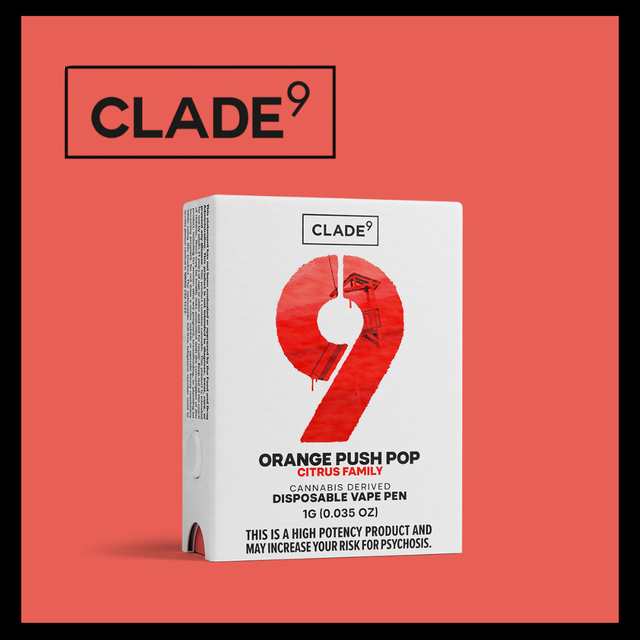
Clade9 places Orange Push Pop in its Citrus Family and identifies its lineage as Orange Cookies × Triangle Kush. Its published profile names linalool, limonene, caryophyllene and myrcene.
These details describe the manufacturer’s general profile. The individual package and corresponding laboratory report establish the information for a particular batch.
This example gives readers several distinct details to recognize: a brand name, a cultivar name, a reported lineage, a descriptive family and a product format. Each adds context without replacing the others.
Brand: Clade9
Format: 1g disposable vape
Listing classification: Hybrid
Blue Dream 1g Disposable provides another product identity within the same brand and listed package size.
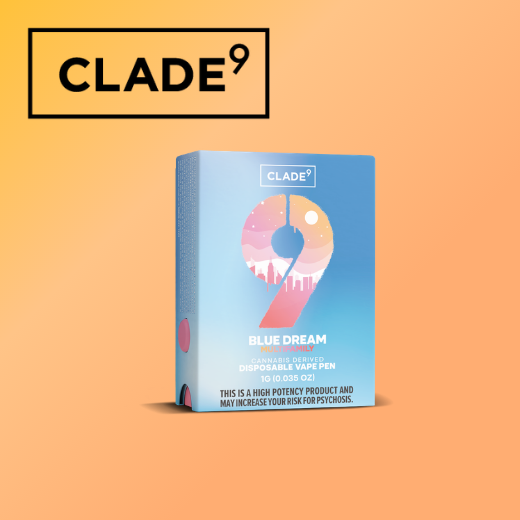
This example highlights the importance of reading the complete product description. “Blue Dream” identifies the name attached to this entry, while “Clade9” identifies the brand and “1g disposable” describes its presentation.
Information about ingredients, manufacturing and laboratory results should refer specifically to this product. Descriptions published for another producer’s Blue Dream cannot establish the contents of this formulation.
A recognizable name can begin the research. The product’s own documentation supplies the details needed to understand it more fully.
Brand: Clade9
Format: 1g disposable vape
Listing classification: Indica-dominant
Lemon Cherry Gelato 1g Disposable adds a different cultivar identity to these three examples.

Clade9 places Lemon Cherry Gelato in its Candy Family. Fire & Oak’s published coverage also discusses this name across flower, pre-roll and disposable formats, illustrating how one cultivar name can appear in several product categories.
For this disposable, the relevant information is the documentation associated with the vape itself. A flower package carrying the same cultivar name has its own composition and laboratory results.
The complete description therefore matters: brand, cultivar, product format and the information attached to the individual package.
Clade9’s published New Jersey catalog includes flower, pre-rolls and vaporizers. Its official product lineup provides a starting point for understanding those categories.
Within a product name, “disposable” describes a device format. It does not, by itself, establish the extraction method or the ingredients inside.
Similarly, “1g” indicates a stated quantity. It does not mean the product contains one gram of THC, nor does it describe the amount delivered in an individual inhalation.
These distinctions matter when reading descriptions. Format, quantity, composition and potency are separate fields, even when they appear together in a short product title.
For the three examples in this article, the shared 1g disposable format establishes a common presentation. Each product still needs its own supporting information.
Transparency becomes useful when readers can connect a statement to an identifiable source.
For a finished product, relevant information includes the manufacturer, product identity, ingredients, stated quantity, batch or lot identification and associated test results. Any manufacturing claims should also be clear enough to understand.
The NJ-CRC’s packaging and labeling guidance addresses disclosure of inactive or excipient ingredients and encourages manufacturers to identify extraction methods for concentrates.
This makes ingredient information a substantive part of evaluating a label. Descriptive language such as “citrus” or “candy” should be read alongside the actual formulation details.
When a description leaves something unclear, that gap should remain a question. A cultivar name or family designation cannot supply missing information about ingredients or manufacturing.
A certificate of analysis, often called a COA, is a laboratory report associated with tested material.
The NJ-CRC’s guide to reading a certificate of analysis explains how product identification, batch or lot numbers, laboratory details and analytical results fit together. It also states that consumers can request a COA from a dispensary.
Begin by checking that the report identifies the relevant product and batch. Then review what was tested and how the results are presented.
New Jersey’s April 2026 testing notice confirms that each batch of usable cannabis and each manufactured product lot must undergo testing. It also identifies information that laboratory reports must contain, including product form, batch or lot number, testing dates and laboratory identification.
A general percentage on a brand website should therefore be distinguished from the laboratory results attached to a particular package.
Evaluating a brand involves comparing sources that serve different purposes.
The founder interview explains Clade9’s stated background and priorities. The manufacturer’s catalog describes its collection. Fire & Oak’s article about Clade9 strains at Fire & Oak provides additional context about cultivar names appearing across formats.
Descriptions in the Fire & Oak menu provide another reference for product names and presentations. Publication dates and updates matter when comparing those descriptions with older articles.
Taken together, these sources help readers identify what is documented, which statements describe the brand generally and which information belongs to an individual product.
No. Clade9 is the brand in these examples. Orange Push Pop, Blue Dream and Lemon Cherry Gelato identify individual products associated with cultivar names.
Lineage describes reported ancestry. It provides context about a cultivar but does not establish the ingredients or laboratory results of every finished product carrying its name.
Yes. Fire & Oak’s Clade9 coverage includes examples across flower, pre-rolls and disposables. Each format should be evaluated using information specific to that product.
No. It describes the listed quantity and device format. The formulation or manufacturing description must provide information about extraction.
No. The relevant results must correspond to the product and batch being evaluated. A shared name does not make laboratory reports interchangeable.
Check the product identity, form and batch or lot number against the corresponding package. The laboratory and testing dates also help establish which material the report describes.
An interview documents the founder’s account of the company’s history and approach. Labels and laboratory reports provide different evidence about individual products.
They share a listed 1g disposable format while carrying different product identities. That allows the discussion to examine names, descriptions and supporting information within a consistent presentation.
Understanding a cannabis brand involves connecting its public identity with information that can be checked.
Clade9’s history and cultivar descriptions provide context. Product formats clarify presentation. Labels and batch documentation provide more specific information about the finished item.
Keep those sources connected, pay attention to what each one establishes and leave unanswered questions open until there is evidence to resolve them.